
The valuable role a mentor plays in your life and business

Mentors are a vital source of knowledge and experience both in life and business. So why don’t more people have mentors? Where do you find mentors? Who should be your mentor?

Two things happened this week which brings me to write this article. First I was both a workshop presenter and panel member at the Walan Mayinygu Indigenous Entrepreneurs Pop Up Hub in Port Macquarie, NSW, Australia. The role of mentors was a topic that resonated with those in the audience. Secondly, I have just begun as a mentor for a student at a local university here in Brisbane. This is the second year I have taken on the role as a student mentor. Mentoring is a part of Foley Business Management’s core value of ‘Legacy: To create a better world for our children’s children’.


What is a mentor?

First we need to understand what a mentor is. Mentors are often mistaken as sources of advice. While this is true to an extent, it is not the role of a mentor to come up with the answers. You first need to understand the difference between a mentor, a coach and a consultant. We are just going to focus on mentors for this article.

Mentors can be a source of

  • Knowledge- They come with learning from their education be it learnt from books or life.
  • Experience- They have already done what you are wanting to do. They bring an understanding of success and failure, right and wrong, the highs and the lows.
  • Networks- They have connections with other people in and around their profession or business.
  • Guidance- They can provide guidance on what to consider for your next steps towards realising your goals.
  • Professional Development- They can give you awareness of what to consider to develop yourself personally in your career or your business.

Many mentors

You may have different mentors in your life for different reasons. In life you generally will have people you go and speak to about certain matters you are experiencing. For each different situation you may speak to different people based upon the situation. Likewise in our career or in business you should have certain people you go to speak with about certain matters as to others. So you should seek to have a number of mentors in different areas!

Experienced

For many a mentor is someone you may already know or you may seek out. You will have some level of confidence in them that you are receiving the right feedback from someone who has already been in your position or is aware of what is required.  Note I use the word ‘feedback’ and not advice. This is very important as Mentors are not consultants!

Sounding Boards

Mentors are firstly a sounding board. They’re someone you run something by to gain their feedback on the matter. For example,

A student may ask questions about what it’s like working in accounting? What type of work such as tax and audit? Should they apply to work in a Big 4 accounting firm, mid tier or small tier practice? Or should they work in commercial or as a company accountant? I can give my feedback on this based on my experience working in public practice and in commercial and what to expect working in the different tiers based on my discussions with other accountants.

From the business owner I may be asked about what are the pro’s and con’s of starting a business? Who should they talk to about a particular business matter? What have I learnt from starting a business? Should they start working in their business full time?

Finding the answer

Most of the time as a mentor I do not give a response to the question but ask a question that is relevant to the person based upon the question.

For example, if a mentee asked ‘should I go into business full time?’ My response might be ‘do you have the clients to go into full time business with?’ This is a question but with a specific focus around the person’s ability to earn money. The response question makes the mentee open and broaden their mind as part of learning in the mentee/mentor relationship.

A student may ask ‘should I go into public practice or commercial accounting?’. My response back might be. “They are different and have their pro’s and cons. Do you have a preference?” Again, the purpose of the response is to find out if the student has their own preferred choice of career path. This may also be followed with “Do you know what type of work you would do in public practice and in commercial accounting?” as in most cases the student will not.

Where do I find a mentor?

You may already know people who can be your mentor. For example, if you are thinking of starting a business, you may already know someone in business to ask questions from. If you don’t, you may want to go along to a Chamber of Commerce night with other business people.

If you’re wanting to speak to someone who has experience in your particular business area, then you might want to speak to people you know through your associations. For example, an electrician wanting to find out about starting a business in air conditioning installation may want to talk to a building industry association.

If you want to find someone very specific or niche, such as an Indigenous business owner, you can reach out to people online. This could be from emailing them directly from a search using Google or using Facebook or LinkedIn to connect. Please note I don’t accept unknown connections through LinkedIn unless we have already met and I know you. Or you have at least sent a message with your LinkedIn request explaining who you are and why you want to connect.

Who should be your mentor?

Sometimes people will reach out to people who are not necessarily going to be able to provide the time and knowledge that is needed. So if you’re starting out in business, don’t necessarily reach out to Richard Branson or Warren Buffett to become your mentor. Aim for people who are where you want to be in 5 to 10 years…. and be realistic!!!!! Ask someone who has ran their business for 5 years what their experience has been and what lessons they have learnt. Learn from both their success and failure.

Free or Pay?

Remember that some people you meet are professional coaches or consultants. So the line between mentor and these may overlap when it comes to feedback or advice. So if someone you approach is a professional, you want to clarify with them whether they charge for the service. You then have the choice of either accepting their fee or kindly declining. Don’t be offended if they ask for you to pay them. This is how they make a living to provide for their family- putting food on the table, a roof over their heads and paying their bills. Volunteer work and goodwill aren’t accepted by Woolworths or AGL as forms of payment for groceries and electricity bills.

What should I consider in a business bank account?

Finding the right bank account for your business is a critical part to starting a business. Let’s look at some of the main consideration’s you should research before setting up a business bank account.

Who do you currently bank with?

Who you currently bank with is high consideration to a business, especially when first starting out. This is because transfers between banks can occur over night or take several day’s. Where as a transfer between accounts at the same bank can occur possibly instantaneously. This is important if you need to transfer money quickly to make business payments using personal funds or wanting to manage your money effectively.

What are the transaction fee costs?

Different banks and accounts will have different fee rates and charges for transactions. Some banks will charge based upon the number of transactions per month, so look into whether the account has unlimited and free transactions for domestic transfers. Look into the cost of overseas transfer costs also if your business intends to do overseas transaction’s. Prices for transfers or exchange fees and payments can vary considerably between bank’s. Hopefully you’re still not using cheque’s. But if you are, find out what the fees are for writing and depositing cheque’s.

What are the account fees per month?

Different banks and accounts will have different account fee’s. Ideally you would like an account with no account keeping fees. But you will need to research if a no account keeping fee account is right for your business.

What are the additional fee costs?

Banks will invariably have other fees that they can incur on your business account. The most notable is the overdrawn account fee. Check out the costs on this and any other fees a business bank account may attract given your business circumstances.

What additional bank accounts will I need?

The first additional accounts you may need are credit card and overdraft facilities. These can be helpful for managing cashflow in a business. Another is an interest bearing saver account for when you have idle funds sitting in your account that could be earning you interest. Online savings accounts are an example of these. Again, look into all the fees and charges associated with these additional bank accounts to consider as to whether they are suitable for your business.

What are the online facilities like to use?

We live in the age of the internet where the majority of transactions are now done online. So having online facilities that are easy to access and manage is an advantage.

How do I authorise transactions?

This is important as every bank has a different security process for your benefit. Security is critical for the accessing of your bank account’s. The level of security can vary for authorising transaction’s. Most banks now use two factor authentication, which requires two different ways to authorise the one transaction, for example a password and a PIN. Each banks required security and how you set your account management up will determine how this will occur. As a bookkeeper I am not happy with the need for some bank’s requiring a token key generator that is connected to a key ring. With the advent of smartphones one would have hoped we had transitioned away from the need for these.

Do they have an app I can use on my phone?

Being able to manage your business bank account on the go can be critical to most business owners. From being able to check if payments have been received from client’s to checking if you have enough funds for payment’s. Being able to check and perform transactions using a smart phone app is a definite advantage to the modern day business owner!

What other facilities will my business need now and in the future?

We discussed already that you may need additional bank accounts. But you may need other facilities to run your business. An example of this is a credit card or EFTPOS facility.

What is customer service like as a business customer?

It is great to have all the bell’s and whistle’s of an account. But the one thing that is always needed with any service provider is service. So do you as a business account holder receive priority service over personal account holder’s? Do you have a business bank manager who actually contacts you on a regular basis? Do you have a way to contact and speak with someone quickly to remedy or prevent issue’s? Find out what customer service level your bank will provide you as a business bank account holder as it could impact the relationship you have with your customers and suppliers when it comes to receiving and making payment’s.

Will I be able to download or integrate with my bookkeeping software?

Being able to have your bookkeeper access and transfer transactions with your business bank accounts can be critical to the running of your business. You will need to look at whether your account can receive payment registers from your accounting software, upload bank transactions for recording receipts and reconciling your bank statements. These are all important with modern day bookkeeping software so you can work with your bookkeeper to manage your finances effectively.

Hopefully this has given you a starting point for further research into which business bank account is best for your business. There are other factors you should consider but the above should assist you with the process.

Foley Business Management provides financial management solutions. We do this by assisting small business, not for profit and social enterprise make more informed business decisions around their finances. We provide bookkeeping, management accounting and reporting and consultancy services. If you are considering starting a business or have a business, contact us to discuss how we can assist you and your business to improve and make better business decisions.

The information in this article is general in nature and should not be relied upon. It is advised that you discuss with your relevant professional what financial products are best for you and your business before making a decision.


From The Oscars to Graduate Recruitment Videos

https://www.youtube.com/watch?v=0zlEFTgk1tg

Within days of each other accountants have been in the ‘spotlight’ for getting laughs….. but not for the right reasons. First, the mix-up with an Oscars envelope for ‘Best Picture’ now termed envelopegate. Second, an ‘excruciating’ recruitment video from the Australian Department of Finance to attract graduates. So how are accountants viewed?

Trust is key

While we do have our moments, generally accountants are viewed as one of the most trusted professions. In fact we have been consistently ranked 11th in the Roy Morgan’s Annual Image of Professions Survey. Deloittes was ranked number one to work by graduates by GradConnections. But the accounting profession has been undergoing significant change.

Meeting client growing needs

Accounting firms are now calling themselves ‘consulting’ firms and their accountants now referred to as consultants. Why? Because the profession is now becoming a more broad service provider to business. No longer are we just ‘number crunchers’ and ‘bean counters’ preparing tax returns and financial statements. Our services have gone further into providing advice and information to business managers. This allows business managers to make more informed decisions. Technology now extends into providing information technology services in accounting. For larger firms they are becoming ‘one stop shop’ business service providers to business. This has seen them competing with consulting firms as McKinsey & Co, Bain & Co, Boston Consulting Group.

Remaining relevant with customers

Bookkeepers and management accountants are no different. With the introduction of Goods and Services Tax in Australia, the role of bookkeepers has become important. Our role with owners and management has become more intimate. Business is becoming more technology based through transactions, e-commerce, online banking, cloud accounting and many addon features. Our knowledge, skill and experience is critical to success. It’s becoming necessary for business to keep up with competitors. Remaining relevant with customer technology needs is required by business.

Technology key to innovation

To demonstrate how technology influences business, let’s look at some of the best performing USA stocks in the last 20 years. We see Facebook, Amazon, Microsoft, Google and Apple. Watching Sky News “Smart Money”, Xero Managing Director Trent Innes identified the cost benefits to business using cloud based technology, allowing remote access to their business on mobile devices as smartphones and tablets. This allows business success through innovation and improved cashflow management. This is followed by CEO Simon Griffith from Who Gives a Crap, an online social enterprise. Their purpose is to build toilets for those in need by selling 100% recycled paper cleaning products online. They use tehnology to streamline their logistics and warehousing to minimise costs.

We’re human, but we’re needed

So yes, accountants or consultants are human. It is what makes the profession one of the most trusted and sought after. Our work is wide and varied as our clients needs change and evolve. Management accountants are sought for our intimate understanding of our clients. This allows us to provide insights they could not achieve on their own. Our role is no longer bean counting. It’s now advising and using technology to allow business owners and managers to make more informed decisions. Technology is now a growing part of the service provision for clients. Innovation is essential to for businesses to remain relevant with their customers, now and in the future.


Why Foley Business Management is relevant to your business

Our purpose is to build sustainable communities and to create a better world for our childrens’ children.

This is why we take a holistic approach to our clients, not just preparing financial statements and leaving it to the client to work out on their own. We provide financial management solutions to small businesses, not for profits and social enterprise so they can make informed decisions. For many people, owning a business is a big step. One that will affect you, your family and your community.

If you would like to speak to one of our consultants for a free 30 minute consultation, please contact us to organise a time that is convenient. A business can be a rewarding experience for you, your family and your community! Let’s make sure you do it the right way.


Indigenous professionals measure up to Close The Gap- But how many Indigenous Accountants are there?

Indigenous professionals highly sought

How many Indigenous accountants are there?

The Australian Federal Governments 2017 Closing The Gap report didn’t quite meet expectations of 9 years ago. All but one of the 7 areas had been met, being Indigenous year 12 completion rates . This coincides with findings Indigenous professionals are meeting parity in employment, per Stan Grant’s article for the ABC.

This is not surprising. Indigenous professionals are highly sought given the low supply of university graduates. The number for Indigenous students studying a business related degree in 2016 was 1,500 students in Australia. To compare, this is the number of first and second year students studying a commerce degree at one university. But this number is not in one course in one university, it is in the whole of Australia.

Professions driving Indigenous professional numbers

The work of many different bodies have assisted in driving increased Indigenous professional numbers. There is the ‘More Aboriginal and Torres Strait Islanders Teachers Initiative’ (MATSITI) which promotes more Indigenous teachers; Australian Indigenous Doctors Association who promotes more Indigenous doctors; and Indigenous Lawyers Association of Queensland who promotes more Indigenous lawyers. All have created means and support to further the pipeline of Indigenous professionals in their fields.

Indigenous Accountants Australia initiative

Indigenous Accountants Australia is a little different, but has the aim to increase the number of Aboriginal and Torres Strait Islander accountants in Australia. This is not an association or body but a ‘joint initiative’ of the two peak professional accounting bodies, Chartered Accountants Australia and New Zealand and CPA Australia. I commend both organisations to take it upon themselves to promote increasing the number of Aboriginal and Torres Strait Islander accountants. I currently sit on the initiatives ‘advisory committee’.

New Zealand and Australia First Nations People accountants

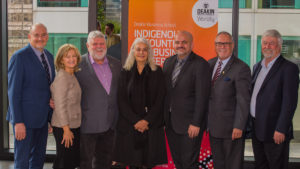
Both bodies operate in Australia and New Zealand. In fact, there was a gathering of First Nations people accountants and business people last year at the Indigenous Accounting and Business Conference at Deakin University in October 2016. Here we met with our Maori accounting cousins from across the ditch, Ngā Kaitatau Māori o Aotearoa (National Maori Accountants Network). Both accounting bodies through the joint initiative were event sponsors.

Accounting professions standards and ethics

The two professional accounting bodies stand on their being the peak accounting bodies for the accounting profession in Australia and New Zealand. A profession built on reputation of holding standards and ethics. Some words that come to mind for accountants, especially in audit, are ‘quality, accountability, addressing risk and areas of concern,  objectivity’. The most resonating words in audit is the term ‘true and fair view’ for an auditors opinion.

Reaching parity for Indigenous accountants unrealistic in the short term

For parity of 3% to be reached in the accounting profession, there would need to be more than 6,000 accountants with a professional designation (sometimes referred to as a ‘qualified’ accountant). such professional designations are Chartered Accountant (CA), Certified Practicing Accountant (CPA), IPA or similar. This is not a realistic number in the short term considering the time to become a professional designation accountant. A high school student must complete any prerequisite subjects in high school which is decided in year 10 for year 11 and 12 studies. A degree is 3 years minimum and the professional bodies programs take upto 18 months. This is a 7 year pipeline from start to finish without deferral.

Who is accountable?

So how many Aboriginal and Torres Strait Islander accountants with a professional designation are there? The honest answer is it is not known. Why not?

The question is

  • How would you logically expect to find out this number?
  • Who would you expect to be asking the question to measure and report?
  • Who is in the best position to do so? Who would take an onus of ensuring ‘quality, accountability, addressing risk and areas of concern, objectivity’? Who would ensure the number presented was a ‘true and fair view’?
  • If you wanted to know how many Aboriginal and Torres Strait Islander members of Chartered Accountants Australia New Zealand and CPA Australia there were, who would you expect to have this number? In what documentation would you expect them to gather this data?
  • How would you track year opening and closing balances, like a balance sheet, to know the movement to know if the number increased or decreased? And by how much?

Has the number increased?

In summary, Indigenous professionals are in high demand with a low supply from universities. There are Indigenous associations and initiatives that are driving to increase this number in their respective professional fields. The Indigenous Accountants Australia initiative is one such initiative with the aim to increase the number of Aboriginal and Torres Strait Islander accountants in Australia. It is a joint initiative of the two peak professional accounting bodies, Chartered Accountants Australia New Zealand and CPA Australia. However, we do not know how many Aboriginal and Torres Strait Islander accountants with a professional designation there are. The numbers are not being collected and reported. So how many Aboriginal and Torres Strait Islander accountants are there? And has the number increased year on year?

Indigenous Accounting and Business Conference 2015

(Photo credit to Primetime)