
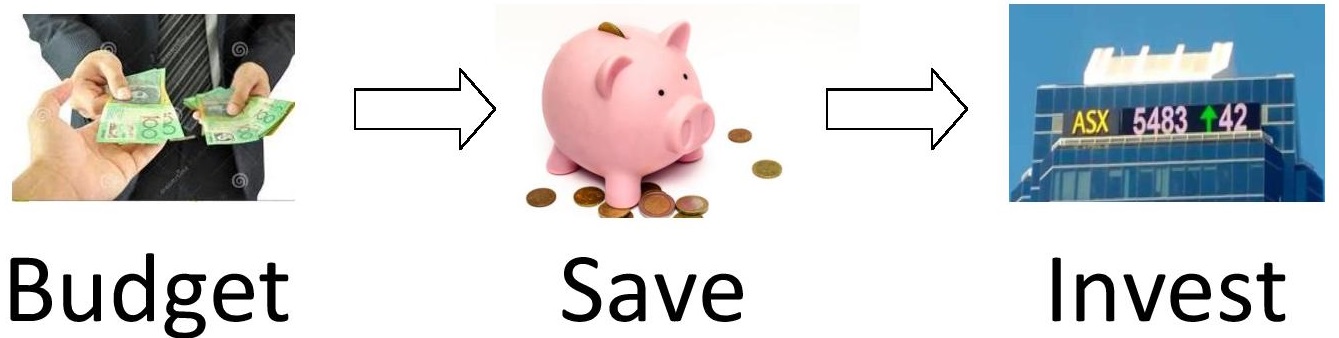
When I received my first pay as a university graduate, it was by chance that I found an easy way to budget and save money for investments. Let me tell you how I did it in 5 steps.
- First, I had two bank accounts. The first bank account is where my money went into from my pay. Lets say I make $1,000 after tax, so what goes into my bank account. This account is one that I would rarely have access to with a card to draw from. I would then transfer a weekly allowance to myself to my second account. I wanted an account with no transaction fees and ideally paid interest.
- I then had my second bank account which is my card account. This is the one I draw money from to pay for my weekly expenses such as fuel, groceries, and going out. By only having a weekly allowance it meant that I was aware of how much I could spend. Being a card account, this may come with some transaction fees.
- To ensure I had the right amount of money going into the card account, I had to prepare a budget. So I determined my allowance based upon my budget. The budget began with my essentials ie groceries, fuel. loan repayments etc. (my rent came from my first account as a regular payment). Then my discretionary spend ie dining out, going out etc. Excluding any loan repayments, I really only need about $200 for the week to cover all of this. Note that I spent with my cash / debit card and not my credit card. This way I was strict in my spending. But I also only paid my credit card from my allowance.
- So lets say my rent is $200 per week and my allowance is $200 per week. This gives me savings of $600 per week. Now I will have other one off payments come from this as car registration and insurances. But ideally I will know when these are coming up and I will take this into consideration to save money from my allowance money by cutting back on my discretionary spend.
- So by doing this I am able to save money in the first account. Once I reached an amount I can use to invest with, which my minimum investment in shares is $1,000, and I have found an investment I am happy with then I transfer the money out to buy the investment. If not, I would transfer it into a bank savings account bearing a higher interest rate.
Hints and Tips
- Look for accounts with no or low transaction and account fees.
- Look for an account where you earn bonus interest, especially for your first account that your pay goes into!
- Only use your credit card where necessary.
- Remember Pay Later app services like ‘Afterpay’ are essentially like a credit card. These services are being heavily promoted to students by stores as an alternative to paying with your existing cash. You should treat them as a loan or a credit card!
- I found certain financing arrangements do work well for necessary bigger ticket items such as white goods as a way to improve my cashflow and to pay from my allowance.
NB: I have just got off the phone from the Commonwealth Bank who I bank with. I was checking out their products and was surprised there was no product combination that currently meets all of my requirements listed above. I have left feedback for them to reconsider how they structure their products to improve customer satisfaction to promote better customer saving and investment strategies.
Please note the above article is my own personal experience of how to save, budget and invest and should not be relied upon. You should speak to your financial planner for advice on your own financial matters to ensure they are right for you.