
From The Oscars to Graduate Recruitment Videos

https://www.youtube.com/watch?v=0zlEFTgk1tg

Within days of each other accountants have been in the ‘spotlight’ for getting laughs….. but not for the right reasons. First, the mix-up with an Oscars envelope for ‘Best Picture’ now termed envelopegate. Second, an ‘excruciating’ recruitment video from the Australian Department of Finance to attract graduates. So how are accountants viewed?

Trust is key

While we do have our moments, generally accountants are viewed as one of the most trusted professions. In fact we have been consistently ranked 11th in the Roy Morgan’s Annual Image of Professions Survey. Deloittes was ranked number one to work by graduates by GradConnections. But the accounting profession has been undergoing significant change.

Meeting client growing needs

Accounting firms are now calling themselves ‘consulting’ firms and their accountants now referred to as consultants. Why? Because the profession is now becoming a more broad service provider to business. No longer are we just ‘number crunchers’ and ‘bean counters’ preparing tax returns and financial statements. Our services have gone further into providing advice and information to business managers. This allows business managers to make more informed decisions. Technology now extends into providing information technology services in accounting. For larger firms they are becoming ‘one stop shop’ business service providers to business. This has seen them competing with consulting firms as McKinsey & Co, Bain & Co, Boston Consulting Group.

Remaining relevant with customers

Bookkeepers and management accountants are no different. With the introduction of Goods and Services Tax in Australia, the role of bookkeepers has become important. Our role with owners and management has become more intimate. Business is becoming more technology based through transactions, e-commerce, online banking, cloud accounting and many addon features. Our knowledge, skill and experience is critical to success. It’s becoming necessary for business to keep up with competitors. Remaining relevant with customer technology needs is required by business.

Technology key to innovation

To demonstrate how technology influences business, let’s look at some of the best performing USA stocks in the last 20 years. We see Facebook, Amazon, Microsoft, Google and Apple. Watching Sky News “Smart Money”, Xero Managing Director Trent Innes identified the cost benefits to business using cloud based technology, allowing remote access to their business on mobile devices as smartphones and tablets. This allows business success through innovation and improved cashflow management. This is followed by CEO Simon Griffith from Who Gives a Crap, an online social enterprise. Their purpose is to build toilets for those in need by selling 100% recycled paper cleaning products online. They use tehnology to streamline their logistics and warehousing to minimise costs.

We’re human, but we’re needed

So yes, accountants or consultants are human. It is what makes the profession one of the most trusted and sought after. Our work is wide and varied as our clients needs change and evolve. Management accountants are sought for our intimate understanding of our clients. This allows us to provide insights they could not achieve on their own. Our role is no longer bean counting. It’s now advising and using technology to allow business owners and managers to make more informed decisions. Technology is now a growing part of the service provision for clients. Innovation is essential to for businesses to remain relevant with their customers, now and in the future.


Why Foley Business Management is relevant to your business

Our purpose is to build sustainable communities and to create a better world for our childrens’ children.

This is why we take a holistic approach to our clients, not just preparing financial statements and leaving it to the client to work out on their own. We provide financial management solutions to small businesses, not for profits and social enterprise so they can make informed decisions. For many people, owning a business is a big step. One that will affect you, your family and your community.

If you would like to speak to one of our consultants for a free 30 minute consultation, please contact us to organise a time that is convenient. A business can be a rewarding experience for you, your family and your community! Let’s make sure you do it the right way.
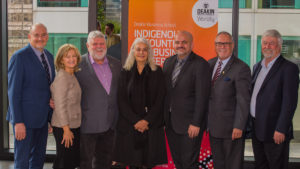

Indigenous professionals measure up to Close The Gap- But how many Indigenous Accountants are there?

Indigenous professionals highly sought

How many Indigenous accountants are there?

The Australian Federal Governments 2017 Closing The Gap report didn’t quite meet expectations of 9 years ago. All but one of the 7 areas had been met, being Indigenous year 12 completion rates . This coincides with findings Indigenous professionals are meeting parity in employment, per Stan Grant’s article for the ABC.

This is not surprising. Indigenous professionals are highly sought given the low supply of university graduates. The number for Indigenous students studying a business related degree in 2016 was 1,500 students in Australia. To compare, this is the number of first and second year students studying a commerce degree at one university. But this number is not in one course in one university, it is in the whole of Australia.

Professions driving Indigenous professional numbers

The work of many different bodies have assisted in driving increased Indigenous professional numbers. There is the ‘More Aboriginal and Torres Strait Islanders Teachers Initiative’ (MATSITI) which promotes more Indigenous teachers; Australian Indigenous Doctors Association who promotes more Indigenous doctors; and Indigenous Lawyers Association of Queensland who promotes more Indigenous lawyers. All have created means and support to further the pipeline of Indigenous professionals in their fields.

Indigenous Accountants Australia initiative

Indigenous Accountants Australia is a little different, but has the aim to increase the number of Aboriginal and Torres Strait Islander accountants in Australia. This is not an association or body but a ‘joint initiative’ of the two peak professional accounting bodies, Chartered Accountants Australia and New Zealand and CPA Australia. I commend both organisations to take it upon themselves to promote increasing the number of Aboriginal and Torres Strait Islander accountants. I currently sit on the initiatives ‘advisory committee’.

New Zealand and Australia First Nations People accountants

Both bodies operate in Australia and New Zealand. In fact, there was a gathering of First Nations people accountants and business people last year at the Indigenous Accounting and Business Conference at Deakin University in October 2016. Here we met with our Maori accounting cousins from across the ditch, Ngā Kaitatau Māori o Aotearoa (National Maori Accountants Network). Both accounting bodies through the joint initiative were event sponsors.

Accounting professions standards and ethics

The two professional accounting bodies stand on their being the peak accounting bodies for the accounting profession in Australia and New Zealand. A profession built on reputation of holding standards and ethics. Some words that come to mind for accountants, especially in audit, are ‘quality, accountability, addressing risk and areas of concern,  objectivity’. The most resonating words in audit is the term ‘true and fair view’ for an auditors opinion.

Reaching parity for Indigenous accountants unrealistic in the short term

For parity of 3% to be reached in the accounting profession, there would need to be more than 6,000 accountants with a professional designation (sometimes referred to as a ‘qualified’ accountant). such professional designations are Chartered Accountant (CA), Certified Practicing Accountant (CPA), IPA or similar. This is not a realistic number in the short term considering the time to become a professional designation accountant. A high school student must complete any prerequisite subjects in high school which is decided in year 10 for year 11 and 12 studies. A degree is 3 years minimum and the professional bodies programs take upto 18 months. This is a 7 year pipeline from start to finish without deferral.

Who is accountable?

So how many Aboriginal and Torres Strait Islander accountants with a professional designation are there? The honest answer is it is not known. Why not?

The question is

  • How would you logically expect to find out this number?
  • Who would you expect to be asking the question to measure and report?
  • Who is in the best position to do so? Who would take an onus of ensuring ‘quality, accountability, addressing risk and areas of concern, objectivity’? Who would ensure the number presented was a ‘true and fair view’?
  • If you wanted to know how many Aboriginal and Torres Strait Islander members of Chartered Accountants Australia New Zealand and CPA Australia there were, who would you expect to have this number? In what documentation would you expect them to gather this data?
  • How would you track year opening and closing balances, like a balance sheet, to know the movement to know if the number increased or decreased? And by how much?

Has the number increased?

In summary, Indigenous professionals are in high demand with a low supply from universities. There are Indigenous associations and initiatives that are driving to increase this number in their respective professional fields. The Indigenous Accountants Australia initiative is one such initiative with the aim to increase the number of Aboriginal and Torres Strait Islander accountants in Australia. It is a joint initiative of the two peak professional accounting bodies, Chartered Accountants Australia New Zealand and CPA Australia. However, we do not know how many Aboriginal and Torres Strait Islander accountants with a professional designation there are. The numbers are not being collected and reported. So how many Aboriginal and Torres Strait Islander accountants are there? And has the number increased year on year?

Indigenous Accounting and Business Conference 2015

(Photo credit to Primetime)