Pop Up Entrepreneur Event- Social Enterprise

Brisbane Social Enterprises

I had the privilege of listening to and speaking with some inspirational businesses and social enterprises at this event, notably Orange Sky and Good Beer Co. Both have foundations in Brisbane and both are creating a social impact in the world. Orange Sky provide laundry services to the homeless along the east coast of Australia. Good Beer Co donate over 50% of their profits to charities and worthwhile causes.

Small Business Week

The event is part of Advancing Queensland’s Chief Entrepreneur’s pop up entrepreneur events. These are happening all over Queensland in the lead up to Small Business Week from the 15th to 20th May. Mark Sowerby, Queensland’s Chief Entrepreneur and Cat Matson, Brisbane Chief Digital Officer, were both present on the night as MC’s.

Start Up Co Working Spaces in Brisbane

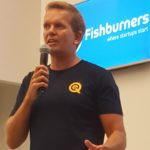
This Pop Up Entrepeneurs event was held in the Brisbane CBD at The Capital, a co working space run by Little Tokyo Two. This is part of a set of co working spaces in the building. The other is Fishburners, who focus on co working spaces for tech startups.

What is Social Enterprise?

Social Enterprise is a very trendy term being used by many businesses. Probably even more so then the term ‘entrepreneur’. But what is a social enterprise? There really isn’t a clear definition that has been agreed to. So let’s look at some.

Social Traders defines social enterprise as ‘businesses that trade to intentionally tackle social problems, improve communities, provide people access to employment and training, or help the environment.’

Queensland Social Enterprise Council (QSEC) defines social enterprise as ‘a business operating for a social purpose.’ This includes ‘Limited distribution of profits and/or distribution of profits with the purpose of maximising social impact – the majority of profits are reinvested in the enterprise and/or an associated social entity and are used to maximise social impact.’

The Not For Profit Law information hub then throws in another question of whether social enterprise is not for profit or for profit when setting up.

What has given rise to Social Enterprise?

Social Enterprise has become an alternate means to

  1. Address social issues from a business angle.
  2. Address the issue of reduced government and corporate funding to the not for profit sector.

Unfortunately in Australia there were some changes to funding not for profit organisations by governments at both federal and state level. This resulted in many who were dependent on government funding having to wind up over night. They had little or no revenue from alternate sources other then government.

Social enterprise is not new to Australia. Many not for profit organisations have sourced revenue through for profit arms. For example, Lifeline and St Vincent de Paul have op shops where people donate goods to be sold through the store. The stores are predominantly staffed by volunteers. The biggest social enterprise in Australia would possibly be Sanitarium, the makers of Weet Bix, who are owned by the Seventh Day Adventist Church.

Millennials are now taking a much greater interest in enterprise and its social impact. They are wanting to know what impact their employer is having in society and the social impact that will be had when they make purchases.

Is Foley Business Management a social enterprise?

Well, our purpose is to build sustainable communities. We assist not for profit, social enterprise and small businesses to make more informed decisions in their financial management. As an Indigenous owned business, we specialise in the Indigenous or Aboriginal and Torres Strait Islander sector. So, we intentionally tackle social problems, improve communities, indirectly and directly provide people access to employment and training. But we are an Indigenous owned business that operates as a for profit where much of our profit is returned into the business.

The Challenge for Social Enterprise

The biggest hurdle for social enterprise is the same for any start up- Cash flow. Many start ventures with good intentions, but do not understand the full implications. Having someone who can manage your finances and be able to provide advice to assist you to make more informed decisions is critical to the success of your social enterprise.

As discussed in the Not For Profit Law Information hub, knowing what type of setup is critical in establishing your social enterprise. Understanding both the for profit and not for profit sides of your social enterprise is a great advantage to any social enterprise.

Indigenous professionals measure up to Close The Gap- But how many Indigenous Accountants are there?

Indigenous professionals highly sought

How many Indigenous accountants are there?

The Australian Federal Governments 2017 Closing The Gap report didn’t quite meet expectations of 9 years ago. All but one of the 7 areas had been met, being Indigenous year 12 completion rates . This coincides with findings Indigenous professionals are meeting parity in employment, per Stan Grant’s article for the ABC.

This is not surprising. Indigenous professionals are highly sought given the low supply of university graduates. The number for Indigenous students studying a business related degree in 2016 was 1,500 students in Australia. To compare, this is the number of first and second year students studying a commerce degree at one university. But this number is not in one course in one university, it is in the whole of Australia.

Professions driving Indigenous professional numbers

The work of many different bodies have assisted in driving increased Indigenous professional numbers. There is the ‘More Aboriginal and Torres Strait Islanders Teachers Initiative’ (MATSITI) which promotes more Indigenous teachers; Australian Indigenous Doctors Association who promotes more Indigenous doctors; and Indigenous Lawyers Association of Queensland who promotes more Indigenous lawyers. All have created means and support to further the pipeline of Indigenous professionals in their fields.

Indigenous Accountants Australia initiative

Indigenous Accountants Australia is a little different, but has the aim to increase the number of Aboriginal and Torres Strait Islander accountants in Australia. This is not an association or body but a ‘joint initiative’ of the two peak professional accounting bodies, Chartered Accountants Australia and New Zealand and CPA Australia. I commend both organisations to take it upon themselves to promote increasing the number of Aboriginal and Torres Strait Islander accountants. I currently sit on the initiatives ‘advisory committee’.

New Zealand and Australia First Nations People accountants

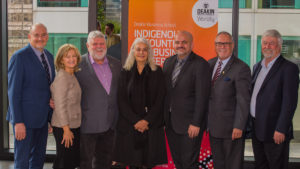
Both bodies operate in Australia and New Zealand. In fact, there was a gathering of First Nations people accountants and business people last year at the Indigenous Accounting and Business Conference at Deakin University in October 2016. Here we met with our Maori accounting cousins from across the ditch, Ngā Kaitatau Māori o Aotearoa (National Maori Accountants Network). Both accounting bodies through the joint initiative were event sponsors.

Accounting professions standards and ethics

The two professional accounting bodies stand on their being the peak accounting bodies for the accounting profession in Australia and New Zealand. A profession built on reputation of holding standards and ethics. Some words that come to mind for accountants, especially in audit, are ‘quality, accountability, addressing risk and areas of concern,  objectivity’. The most resonating words in audit is the term ‘true and fair view’ for an auditors opinion.

Reaching parity for Indigenous accountants unrealistic in the short term

For parity of 3% to be reached in the accounting profession, there would need to be more than 6,000 accountants with a professional designation (sometimes referred to as a ‘qualified’ accountant). such professional designations are Chartered Accountant (CA), Certified Practicing Accountant (CPA), IPA or similar. This is not a realistic number in the short term considering the time to become a professional designation accountant. A high school student must complete any prerequisite subjects in high school which is decided in year 10 for year 11 and 12 studies. A degree is 3 years minimum and the professional bodies programs take upto 18 months. This is a 7 year pipeline from start to finish without deferral.

Who is accountable?

So how many Aboriginal and Torres Strait Islander accountants with a professional designation are there? The honest answer is it is not known. Why not?

The question is

  • How would you logically expect to find out this number?
  • Who would you expect to be asking the question to measure and report?
  • Who is in the best position to do so? Who would take an onus of ensuring ‘quality, accountability, addressing risk and areas of concern, objectivity’? Who would ensure the number presented was a ‘true and fair view’?
  • If you wanted to know how many Aboriginal and Torres Strait Islander members of Chartered Accountants Australia New Zealand and CPA Australia there were, who would you expect to have this number? In what documentation would you expect them to gather this data?
  • How would you track year opening and closing balances, like a balance sheet, to know the movement to know if the number increased or decreased? And by how much?

Has the number increased?

In summary, Indigenous professionals are in high demand with a low supply from universities. There are Indigenous associations and initiatives that are driving to increase this number in their respective professional fields. The Indigenous Accountants Australia initiative is one such initiative with the aim to increase the number of Aboriginal and Torres Strait Islander accountants in Australia. It is a joint initiative of the two peak professional accounting bodies, Chartered Accountants Australia New Zealand and CPA Australia. However, we do not know how many Aboriginal and Torres Strait Islander accountants with a professional designation there are. The numbers are not being collected and reported. So how many Aboriginal and Torres Strait Islander accountants are there? And has the number increased year on year?

Indigenous Accounting and Business Conference 2015

(Photo credit to Primetime)