Pop Up Entrepreneur Event- Social Enterprise
Brisbane Social Enterprises

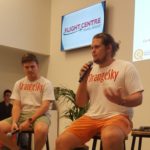
I had the privilege of listening to and speaking with some inspirational businesses and social enterprises at this event, notably Orange Sky and Good Beer Co. Both have foundations in Brisbane and both are creating a social impact in the world. Orange Sky provide laundry services to the homeless along the east coast of Australia. Good Beer Co donate over 50% of their profits to charities and worthwhile causes.

Small Business Week

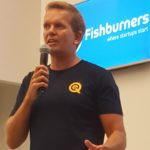
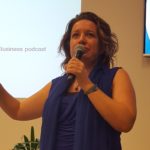
The event is part of Advancing Queensland’s Chief Entrepreneur’s pop up entrepreneur events. These are happening all over Queensland in the lead up to Small Business Week from the 15th to 20th May. Mark Sowerby, Queensland’s Chief Entrepreneur and Cat Matson, Brisbane Chief Digital Officer, were both present on the night as MC’s.

Start Up Co Working Spaces in Brisbane

This Pop Up Entrepeneurs event was held in the Brisbane CBD at The Capital, a co working space run by Little Tokyo Two. This is part of a set of co working spaces in the building. The other is Fishburners, who focus on co working spaces for tech startups.

What is Social Enterprise?

Social Enterprise is a very trendy term being used by many businesses. Probably even more so then the term ‘entrepreneur’. But what is a social enterprise? There really isn’t a clear definition that has been agreed to. So let’s look at some.

Social Traders defines social enterprise as ‘businesses that trade to intentionally tackle social problems, improve communities, provide people access to employment and training, or help the environment.’

Queensland Social Enterprise Council (QSEC) defines social enterprise as ‘a business operating for a social purpose.’ This includes ‘Limited distribution of profits and/or distribution of profits with the purpose of maximising social impact – the majority of profits are reinvested in the enterprise and/or an associated social entity and are used to maximise social impact.’

The Not For Profit Law information hub then throws in another question of whether social enterprise is not for profit or for profit when setting up.

What has given rise to Social Enterprise?

Social Enterprise has become an alternate means to

  1. Address social issues from a business angle.
  2. Address the issue of reduced government and corporate funding to the not for profit sector.

Unfortunately in Australia there were some changes to funding not for profit organisations by governments at both federal and state level. This resulted in many who were dependent on government funding having to wind up over night. They had little or no revenue from alternate sources other then government.

Social enterprise is not new to Australia. Many not for profit organisations have sourced revenue through for profit arms. For example, Lifeline and St Vincent de Paul have op shops where people donate goods to be sold through the store. The stores are predominantly staffed by volunteers. The biggest social enterprise in Australia would possibly be Sanitarium, the makers of Weet Bix, who are owned by the Seventh Day Adventist Church.

Millennials are now taking a much greater interest in enterprise and its social impact. They are wanting to know what impact their employer is having in society and the social impact that will be had when they make purchases.

Is Foley Business Management a social enterprise?

Well, our purpose is to build sustainable communities. We assist not for profit, social enterprise and small businesses to make more informed decisions in their financial management. As an Indigenous owned business, we specialise in the Indigenous or Aboriginal and Torres Strait Islander sector. So, we intentionally tackle social problems, improve communities, indirectly and directly provide people access to employment and training. But we are an Indigenous owned business that operates as a for profit where much of our profit is returned into the business.

The Challenge for Social Enterprise

The biggest hurdle for social enterprise is the same for any start up- Cash flow. Many start ventures with good intentions, but do not understand the full implications. Having someone who can manage your finances and be able to provide advice to assist you to make more informed decisions is critical to the success of your social enterprise.

As discussed in the Not For Profit Law Information hub, knowing what type of setup is critical in establishing your social enterprise. Understanding both the for profit and not for profit sides of your social enterprise is a great advantage to any social enterprise.

St Patrick’s Day 2017- Irish Business People in Australia

Foley Business Management has turned our logo from blue to green this week to recognise St Patrick’s Day.

In the lead up to St Patrick’s Day, we recognise the Irish business people of Australia. The Irish have  long connection to Australia since the First Fleet. Ireland has undergone numerous economic and political change that has influenced how business is done both at home and abroad. We have interviewed two Brisbane based Irish business people to share their experiences of Ireland and doing business in Australia.


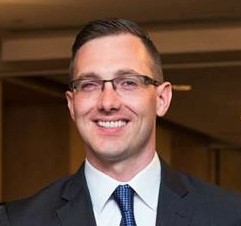
David GreeneDavid Greene, President of the Queensland Chapter and National Board Member, Irish Australian Chamber of Commerce.


Catherine GabottCatherine Gabott, Owner and Director of Suppawtive Solutions.


St Patrick’s Day- Catherine Gabbott, Owner and Director of Suppawtive Health Solutions

In the lead up to St Patrick’s Day, we are recognising the contributions of Irish business people who now call Australia home. In this article we interview Catherine Gabbott, owner of Suppawtive Health Solutions.

What is your fondest memory of Ireland?

The winter snow was always one of my favourite times. Both as a child and as a teenager in college we would engage in snowball fights and have a lot of good fun and laughs doing so. As an adult, I really appreciated the history of Ireland. The vikings invaded Dublin in 988 and evidence of their habitats exists to this day. Ireland has a long rich history which is evidenced in its architecture and artefacts, like the Book of Kells which is housed in Trinity College. For me, the images of Dublin City evoke fond memories of growing up there rather than images of green rolling hills. This is because I am a city girl and always will be, Dublin will always be where my heart belongs.

What made you the business person you are today?

I originally started out in IT but have always had a love to work with animals. A few years ago I got the opportunity to work as a dog trainer with the RSPCA in Queensland. It was this opportunity that enabled me to realise a new passion in my life. It led me to study a Diploma in Animal Naturopathy and starting my own company.

I can’t pinpoint one thing that made me the business person I am today, but a lot of life’s hurdles helped me grow as a person as well as some great opportunities that opened the proverbial doors. I have always followed what I felt was right at the time and believed that I have the capability to do whatever I set my mind too. I believe that it is more this drive and belief in myself while doing something that I love that has made me into the business person I am today.

What does your typical work day involve?

A typical day for me involves checking emails, making appointments and visiting clients in their home to discuss their animals health and nutrition. Following a consult I prepare a treatment plan that is customised to the clients pet. A follow up consult occurs 2-4 weeks after the initial consult to review the animal and monitor its progress.

I will very soon be a qualified Canine Bowen Therapist. This means I can use massage to help dogs recover from physical injuries or where they are stiff and sore due to soft tissue problems and degenerative conditions.

Why do you do what you do?

I started on this path due to the death of a beloved pet, my dog Pepper. All his life Pepper had been plagued with health issues from hot spots, ear infections, itchy paws to tummy upsets. After his death from pancreatitis I started researching animal nutrition and basically had a light bulb moment. I realised that what I had been feeding him was the cause of all his problems. I then enrolled to study Animal Nutrition and loved what I was learning so much I quickly realised that this was a career that I wanted to follow.

When you speak to people in the animal care industry, many will have an animal in their life that somehow influenced their decision to get into this field. Whether it was adopting a rescue animal, taking a dog to a training class and then become a dog trainer, to having a sick animal. Although Pepper’s death was a terrible tragedy it was his death that put me onto this path and the belief that I can help prevent another animal suffering the way he did.

What is instilled in you from your Irish upbringing that has made you the person you are today?

The Irish people have a passion and drive that is different to other cultures. I have lived around the world and there is something different about the Irish. I think growing up in the era that I did, where there was a big change happening in Ireland, helped me stand up for what I believe in and follow what I believe is the truth. In the field that I am in there is a lot of skepticism and controversy so you have to be strong to stand by your beliefs for the betterment of a pets life.

What don’t we have in Australia that is in Ireland you would like to bring here?

Australian doesn’t have the architecture that I miss from Ireland, the really old buildings dating back many centuries. However, Australia has sunshine which is something seriously lacking in Ireland.


St Patrick’s Day- David Greene, President of the Queensland Chapter and National Board Member, Irish Australian Chamber of Commerce

David GreeneIn the lead up to St Patrick’s Day, we are recognising the contributions of Irish business people who now call Australia home. In this article we interview David Greene, President of the Queensland Chapter and National Board Member, Irish Australian Chamber of Commerce.

What is your fondest memory of Ireland?

I always remember the rare hot summer days.  We’d only get a couple of days every year when the temperature would stay in the 20s.  I remember thinking then, and still believe now, that it was the nicest place in the whole world when the sun shone. Strolling deserted country lanes, picking blackberries, listening to the birds – an idyllic childhood.

What made you the business person you are today?

The greatest gift we have as Irish people and Irish-Australian’s is our connection to one another – a shared understanding, and often, a shared set of beliefs and frameworks in which we conduct ourselves in both our professional and personal lives.  It was in search of those connections that I first became involved with the IACC, and my role as the Queensland Chapter President is, in most respects, in service to that greater goal of helping Irish people, or those with an affinity for Ireland, to connect, and grow and prosper.

What does your typical work day involve?

A whirlwind of activity from early morning to late evening.  Balancing my professional role as a solicitor, with my role as Queensland Chapter President of the IACC.  I typically get to work around 7.30, and catch up on emails and updates on case law.  Mid-morning is usually a good time for phone calls, and then onto meetings until lunch.

Afternoons typically involve the “heavy lifting” of drafting submissions, preparing for Court, and everything else that goes into a busy solicitor’s day.  I usually leave the office anytime between 5 and 6, and use the commute to make more phone calls.  After dinner, I often get time to reply to more emails and plan out the following day.

There is no distinct separation between my IACC tasks and my solicitor tasks – activities for both are interspersed throughout the day.

Why do you do what you do?

I became a solicitor because I wanted to do good work for ordinary people.  Its that mission, more than anything else, which keeps me going.  I became involved with the IACC, and became Queensland Chapter President, because I felt there was something I could add, and wanted to help other young Irish professionals to make the vital connections necessary to survive and thrive in Australia.

What is instilled in you from your Irish upbringing that has made you the person you are today?

That’s easy – a real and lived form of social justice.  Where I grew up, there was a very strong community and a shared sense of success and failure.  The community, in many respects, shared grief in tragedy, prosperity in the good times, and poverty in the bad times.   There was also a strong sense of “live and let live”, and each of those elements have combined to produce a truly remarkable shared ethos and understanding.

What don’t we have in Australia that is in Ireland you would like to bring here?

Personally, and like most people, I miss my family and would love to have them join me here.  However, I truly believe that if we could bring even a shred of the community spirit which exists in Ireland to the suburbs we live in here in Australia, then this nation would be changed utterly for the better.


Xero Roadshow 2017 Brisbane

The Xero’s Roadshow for 2017 in Brisbane gave some great insights into some of the features that not only already exists, but they will be releasing. We were also able to hear from addon providers who had stalls at the event. The number of addons and apps you can now have either attached to Xero or as separate features is always growing and changing.

Why having an accounting package will improve your business success!

According to ASIC data, after 5 years the success rate of a business is 51%. Who enters into business with the odds of your business not being a success being 49%. You may as well toss a coin to decide if you go into business!

For a business that uses an accounting package, especially cloud software, this dramatically improves to an 88% success rate! The numbers speak for themselves, if you don’t have an accounting package, you are gambling with the success of your business.

Addon for Boosted Benefit

An interesting fact is that only 40% of businesses use an addon connected to their Xero package. While many apps don’t require being connected to your accounting package, businesses could be losing benefits of adding value to their business and clients by not doing so.

The scary thing is some bookkeepers don’t know what addons are out their to recommend to their clients. This means they aren’t even able to offer them the ability to decide if they could benefit from an addon.

As a management accountant, I am constantly looking at ways to not only improve my business, but those of my clients to ultimately improve their ability to make decisions. For this reason I provide clients with software evaluations.

Let’s be honest, as a business owner you want to do what you are good at. You don’t want to be on a computer doing research and being shown through demo’s when it’s not your thing! We can do that for you considering the needs of you, your business, your customers and your suppliers.

New Product- Fixed assets for tax purposes

This is a great new product addition to Xero. For businesses with assets, this will be a great way to keep track of what you do and don’t have. It will also assist with tracking and entering depreciation so you have more accurate reports. I look forward to using this feature for clients!

https://www.instagram.com/p/BQhNTxcg18L/?taken-by=foleybusinessmanagement


MYOB INCITE Roadshow 2017

https://www.instagram.com/p/BQKCT69gGv9/?taken-by=foleybusinessmanagement

Tomorrow, today

This event was predominantly for bookkeepers and accountants who use MYOB. The event opened with Gus Balbontin, former Executive Director of Lonely Planet. The theme of the event was ‘Tomorrow’. Gus spoke of how Lonely Planet had to adapt to the change of media and publishing from the ‘old media’ of papers and magazines to the ‘new media’ of the digital age where everything could be found at the click of a button. A reminder that if you do not move to meet what your customers want for tomorrow, then you will be left behind.

Customers buy holes, not drill bits.

The second part of the roadshow centred around add-ons and getting the most out of them. With a number of add-on exhibitors, this allowed me to re-acquaint myself with those I knew and those I had yet to meet. The event re-inforced the fact business needs are constantly changing. This includes accounting and financial management products. There are literally thousands of add-ons available and our business clients require us to be able to give them recommendations for these add-ons that will allow them to make informed decisions.

Leaders in Business

For this reason Foley Business Management invests time in understanding not only the needs of our clients, but the tools they require to make their businesses better to serve their clients. We are finding our services not only consulting to our clients, but to the providers of accounting and add-on software. Why? Because of our expertise in management accounting, we understand what is needed in software to make it a benefit to users. We are advising the makers of drill bits what the drill bit needs to be able to do and what it needs to do that serves the client.

  • Businesses need a hole.
  • Add-on providers make drill bits.
  • We advise Add-on providers what is needed to use a drill bit, such as a power drill, and how the client will use it, such as in hard wood or soft wood.

How we can assist you and your business or ‘make sense of your dollars’

Our purpose is to build sustainable communities. What we do is provide financial management solutions to small business, not for profit and social enterprise that allows their owners and board members make more informed decisions. We do this by providing bookkeeping, management accounting and consulting services, specialising in the Indigenous sector.

Your business is a valuable part of the community. You provide employment, spend money in the community, provide goods and services the community uses and needs. We want to assist you to do this better by allowing you to make more informed business decisions. Basically, we help to make sense of your dollars.